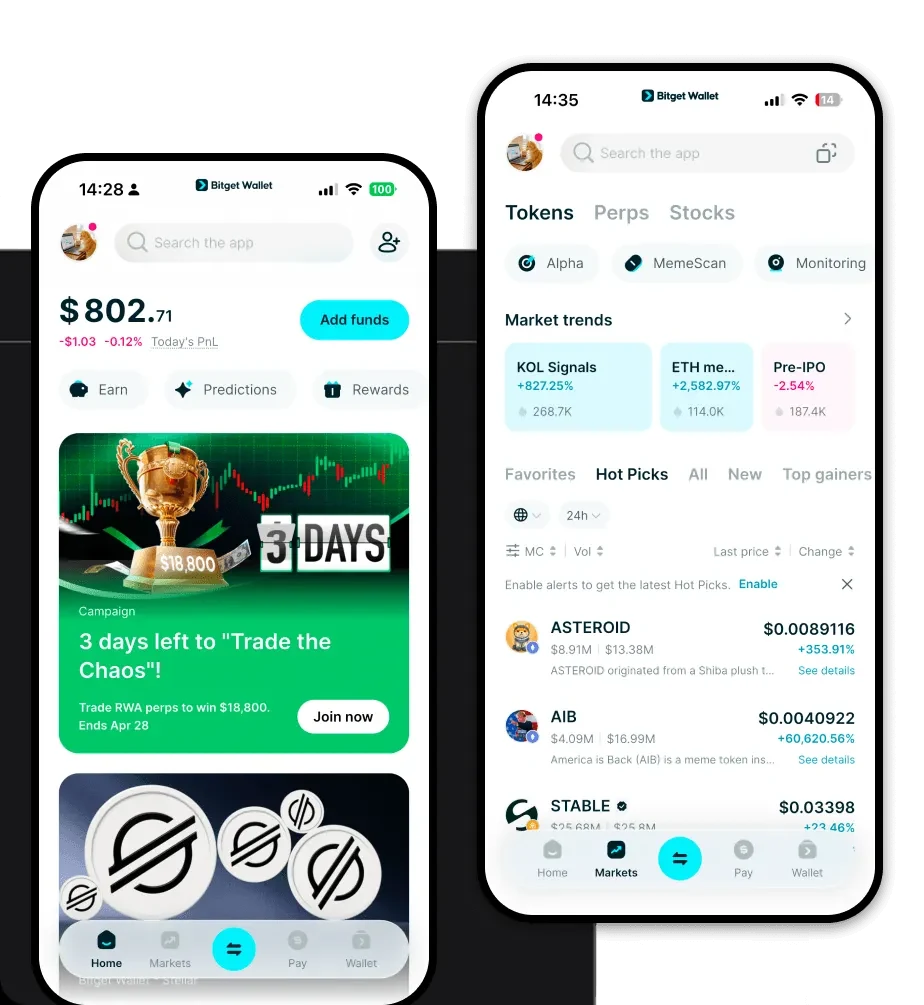
1. What is a HAP1 Wallet?
A HAP1 wallet is a specialized digital interface designed to interact with the blockchain where HAP1 resides. Because HAP1 operates within the EVM (Ethereum Virtual Machine) ecosystem, it requires a wallet that natively understands Ethereum-based protocols, token standards, and smart contract structures. HAP1 is a digital asset that can be securely stored and managed using the Bitget Wallet. As a supported asset within the Bitget ecosystem, users can leverage the wallet's infrastructure to explore Web3 functionalities and manage their HAP1 holdings efficiently.
2. Download Bitget HAP1 Wallet
To begin managing your tokens, you need a reliable gateway. Bitget Wallet offers a seamless experience, whether you are a desktop power user or a mobile-first trader. It supports non-custodial asset management, meaning you retain full control over your private keys and recovery phrases, ensuring only you have access to your funds. The platform is designed for cross-platform convenience, offering robust applications for iOS and Android, as well as a powerful browser extension for seamless interaction with decentralized applications (dApps). To get started, download Bitget Wallet and experience a multi-chain environment that prioritizes speed and security.
3. Why Choose Bitget HAP1 Wallet?
Choosing the right wallet for EVM-based assets like HAP1 is crucial for optimizing your DeFi experience. Here is why Bitget Wallet stands out:
- Native EVM Compatibility: Bitget Wallet is architected to interact perfectly with EVM-compatible chains, ensuring that your HAP1 transactions are processed with the correct gas fee calculations and smart contract interactions.
- Advanced Smart Contract Integration: The wallet provides a streamlined interface for complex contract interactions, making it easier to approve and execute DeFi operations without manual configuration.
- Cross-Chain Interoperability: Easily bridge assets or swap tokens across different chains, allowing you to move liquidity in and out of HAP1 pools with minimal friction.
- High Liquidity Access: By aggregating hundreds of DEXs, the wallet ensures you get the best market rates for HAP1, reducing slippage during high-volume trading periods.
- Institutional-Grade Security: With a $300 million user protection fund, Bitget Wallet provides an extra layer of peace of mind, protecting your assets against unforeseen protocol risks.
4. How to Create a HAP1 Wallet
Setting up your HAP1 management hub takes just a few minutes. Follow these steps to get started:
- Download and Install: Visit the official Bitget Wallet download page to install the mobile app or browser extension on your preferred device.
- Create a New Wallet: Select 'Create Wallet' and set a strong, unique password. Ensure you are not sharing this password with anyone.
- Backup Your Seed Phrase: The app will generate a 12-word recovery phrase. Write this down on paper and store it offline; never share this phrase, as it is the master key to your funds.
- Verify Your Phrase: Follow the on-screen prompts to confirm your seed phrase in the correct order.
- Add HAP1 to Your Assets: Once your wallet is live, click the '+' button, search for 'HAP1', and toggle the switch to display it in your home dashboard.
5. What Can You Do With a HAP1 Wallet?
Once you have HAP1 in your wallet, you open the door to a wide range of DeFi activities. Here is how you can utilize your assets:
- Trading on decentralized exchanges: You can directly swap HAP1 for other tokens within the Bitget Wallet interface, utilizing aggregated DEX liquidity to ensure competitive pricing.
- Staking for yield generation: Lock your HAP1 tokens into validated staking protocols to earn passive rewards, helping you grow your holdings over time.
- Providing liquidity in pools: Add your HAP1 to liquidity pools to earn trading fees from other users, which is a fundamental strategy for DeFi participants.
- Portfolio management in Web3 wallets: Utilize the advanced tracking tools in Bitget Wallet to monitor your HAP1 performance, historical transactions, and overall DeFi asset allocation in real-time.
6. How HAP1 Wallets Are Different from Other Crypto Wallets
When dealing with EVM assets like HAP1, the architecture of the wallet matters significantly. Unlike non-EVM wallets that might focus on UTXO (Unspent Transaction Output) models—which track individual coin movements—an EVM-compatible wallet like Bitget focuses on an account-based model. This is critical for HAP1 because it allows for stateful smart contract interactions, meaning the wallet can 'remember' your balances and contract approvals. Furthermore, while some wallets struggle with managing gas fees during network congestion, Bitget Wallet provides dynamic gas fee optimization, ensuring your HAP1 transactions are prioritized correctly on the blockchain. This distinction makes it far more efficient for DeFi power users who require speed and reliable contract execution.