





What is an EDC Wallet?
An EDC wallet is a digital interface that allows you to store, manage, and interact with your EDC tokens. Because EDC operates on the EVM (Ethereum Virtual Machine) chain, your wallet needs to be fully compatible with EVM-based smart contracts and decentralized applications. This compatibility ensures you can seamlessly interact with the vast ecosystem of decentralized finance (DeFi) protocols that EDC supports.
Are you looking for a reliable and secure crypto wallet for your EDC? Bitget Wallet will be your best choice. Trusted by 40 million users, you can freely explore Web3 on Bitget Wallet. Start your journey now!
Download Bitget EDC Wallet
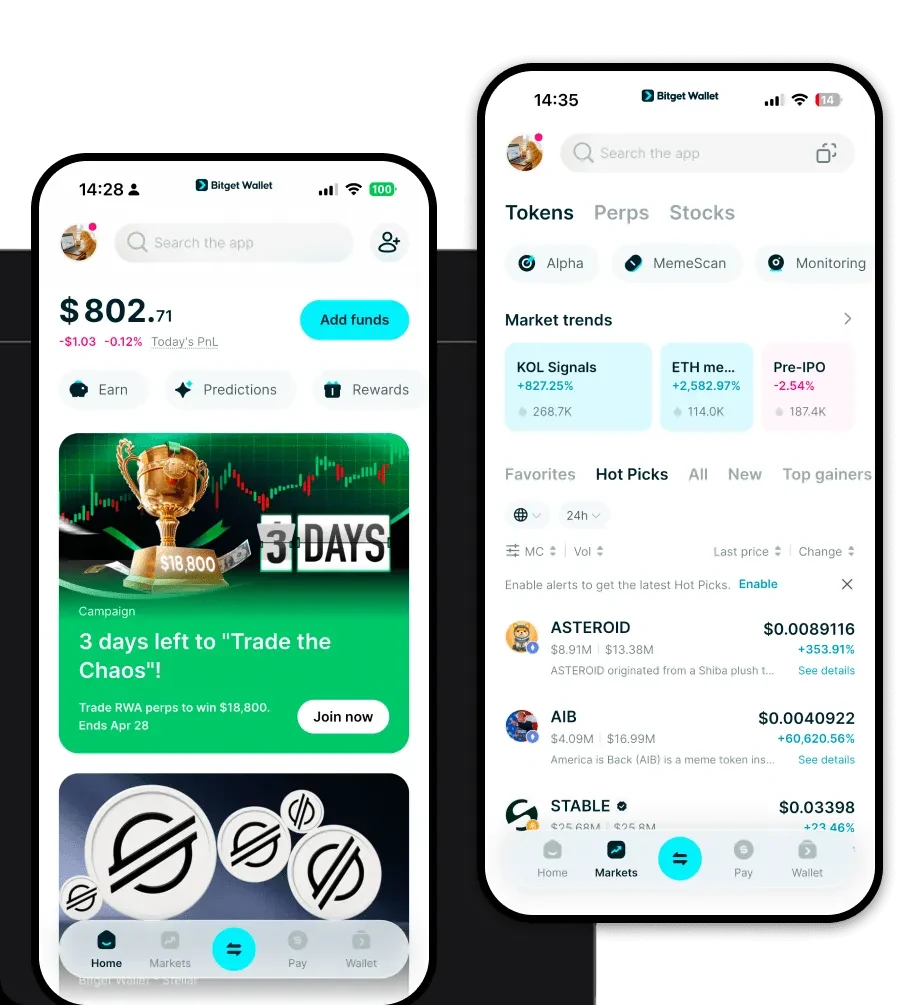
Getting started with your EDC journey requires a secure and versatile gateway. Bitget Wallet serves as a comprehensive portal to the Web3 world, offering full self-custody over your private keys. Whether you are an iOS user, an Android enthusiast, or someone who prefers managing assets via a browser extension, Bitget Wallet provides a unified experience.
The platform is designed for multi-chain flexibility, meaning you aren't limited to just one ecosystem. You can download Bitget Wallet to experience a sleek, user-friendly interface that integrates perfectly with your mobile or desktop setup, ensuring you never miss a market opportunity.
Why Choose Bitget EDC Wallet?
Choosing the right wallet for an EVM-based token like EDC requires more than just basic storage capabilities. Bitget Wallet is engineered to handle the nuances of the DeFi landscape:
- EVM Ecosystem Integration: Bitget Wallet offers native support for EVM chains, ensuring seamless connectivity with thousands of dApps and DeFi protocols without configuration headaches.
- Optimized Gas Fee Management: With built-in gas estimation tools, you can manage your transaction costs effectively, ensuring your EDC transfers are cost-efficient even during peak network congestion.
- Robust Security Architecture: Beyond standard protection, the wallet utilizes a massive $300 million protection fund, providing an extra layer of safety for your digital assets.
- Advanced Liquidity Aggregation: By aggregating hundreds of DEXs and cross-chain bridges, the wallet ensures you get the best swap rates for your EDC, minimizing slippage.
How to Create an EDC Wallet
Setting up your wallet is a straightforward process designed to put you in control of your assets:
1. Download and Install: Visit the official website to download the Bitget Wallet app for your specific device (iOS, Android, or Browser Extension).
2. Create a New Wallet: Open the app and select 'Create a Wallet.' The system will generate a new recovery phrase for you.
3. Secure Your Recovery Phrase: Write down your 12-24 word recovery phrase on paper and store it in a secure, offline location. Never share this with anyone.
4. Verify Your Backup: The app will prompt you to re-enter the recovery phrase to confirm you have backed it up correctly.
5. Add EDC: Once set up, use the search function in the asset management tab to add 'EDC' to your wallet dashboard, and your wallet address will be ready for use.
What Can You Do With an EDC Wallet?
With Bitget Wallet, you can fully leverage the utility of your EDC tokens within the DeFi sector:
- Staking for Rewards: You can participate in staking protocols directly through the wallet to earn passive income on your EDC holdings.
- Yield Farming: Utilize your EDC in liquidity pools to engage in yield farming, maximizing your returns by providing capital to the ecosystem.
- Token Swapping: Take advantage of the integrated DEX aggregator to perform seamless token swapping, exchanging EDC for other assets at the best market prices.
- Providing Liquidity: Become a liquidity provider by depositing your EDC into decentralized pools, which helps facilitate trades for other users while earning you fee rewards.
- Governance Voting: Use your wallet to connect to DAOs and exercise your right to participate in governance voting, influencing the future development of the EDC project.
How EDC Wallets Are Different from Other Crypto Wallets
When dealing with an EVM-based token like EDC, the underlying wallet structure is fundamentally different from non-EVM wallets. While a Bitcoin wallet focuses on UTXO (Unspent Transaction Output) management, an EDC wallet is built on an 'Account-based' model. This allows for complex smart contract interactions, which are essential for DeFi activities.
Furthermore, unlike wallets designed for resource-heavy chains (where you might need to manage RAM or CPU stake), an EVM wallet like Bitget focuses on gas management. You don't need to rent or stake resources; instead, you simply pay the network fee in the native chain currency. Bitget Wallet optimizes this experience by providing a highly intuitive interface that handles these complex smart contract interactions in the background, offering a much lower transaction latency compared to standard, non-optimized wallets.
