





What is a DECK Wallet?
A DECK wallet is a digital interface designed to securely hold, manage, and interact with Chain Deck (DECK) tokens. Chain Deck (DECK) is a community-driven experimental derivative token, originating from the need to showcase multi-chain asset and activity migration. Initiated by a small core team or anonymous developers, its core lies in aggregating cross-chain assets, activities, and governance information through a card-based interface. It targets wallet users, event organizers, and tool developers, aiming to build a lightweight community interaction and asset display platform. Because DECK operates primarily on the EVM (Ethereum Virtual Machine) ecosystem, your wallet must be compatible with EVM standards to interact with the token's smart contracts and governance protocols effectively.
Download Bitget DECK Wallet
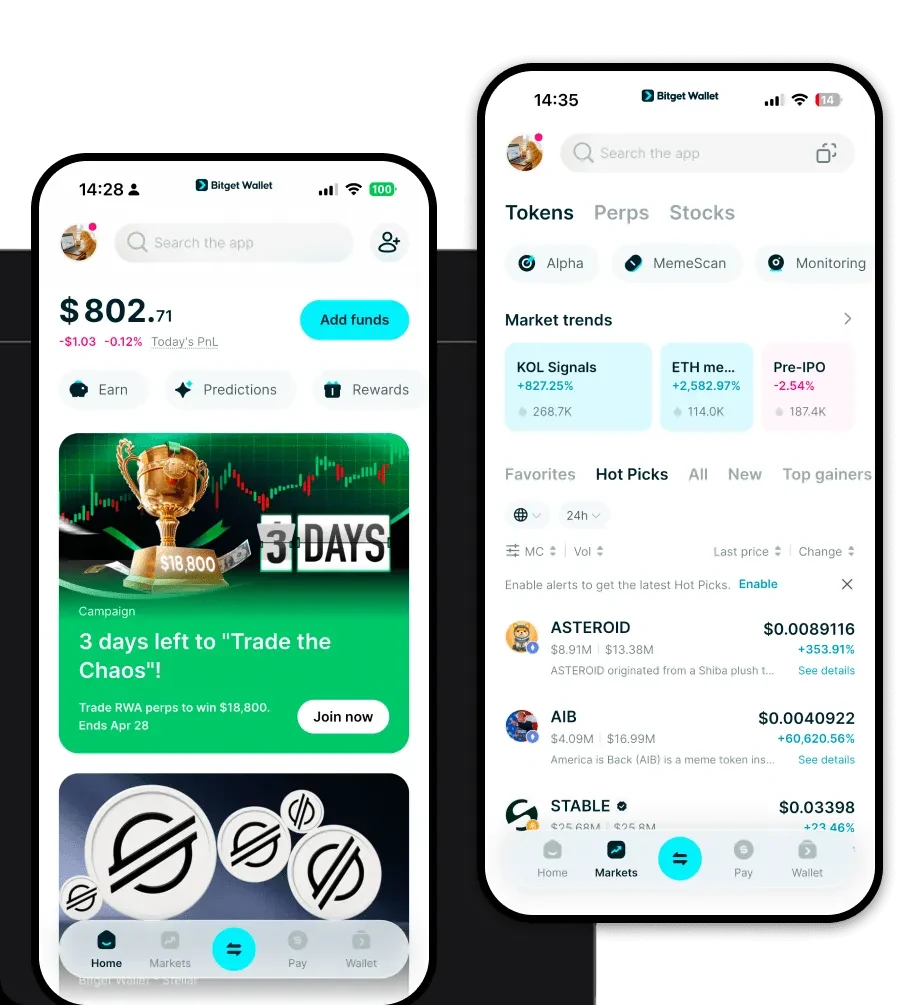
When looking for a reliable gateway to the DECK ecosystem, Bitget Wallet stands out as a top-tier choice. It provides a non-custodial environment where you maintain full ownership of your private keys, ensuring that you—and only you—have control over your assets. Whether you are constantly on the move or managing assets from your desktop, Bitget Wallet offers a seamless experience across iOS, Android, and browser extensions.
The platform is designed to handle the complexities of multi-chain interactions effortlessly. By choosing to download Bitget Wallet, you are equipping yourself with a tool that supports over 130 public chains and millions of tokens, making it the best wallet for DECK and your broader crypto portfolio. Its intuitive design ensures that even those new to the space can navigate the complexities of EVM transactions without technical friction.
Why Choose Bitget DECK Wallet?
Choosing the right infrastructure for your DECK holdings is critical, especially when dealing with experimental and community-driven tokens. Bitget Wallet provides specific advantages tailored to the EVM ecosystem and DECK's unique architecture:
- EVM Compatibility & DeFi Integration: Since DECK is built on EVM standards, Bitget Wallet offers native support for seamless interaction with DeFi protocols, allowing you to manage your assets while staying connected to the broader Ethereum-based ecosystem.
- Advanced Security Infrastructure: With a dedicated $300 million user protection fund, Bitget Wallet provides a robust safety net, significantly reducing the risks associated with unauthorized access or malicious smart contracts.
- Optimized Gas Fee Management: Managing gas fees on EVM chains can be volatile; Bitget Wallet provides real-time fee estimation and smart gas settings, ensuring your transactions are processed efficiently without overpaying.
- Unified Asset Management: The app aggregates cross-chain assets into a single view, which aligns perfectly with DECK’s core mission of multi-chain asset migration and visualization.
- Developer-Friendly Tooling: For users and developers leveraging DECK's infrastructure, the wallet offers high-performance DApp browser capabilities to test and interact with on-chain tools directly.
How to Create a DECK Wallet
Getting started with your DECK journey is straightforward. Follow these steps to set up your Bitget Wallet:
- Download and Install: Visit the official website or your app store to download Bitget Wallet. Ensure you are using the official version to avoid phishing attempts.
- Create a New Wallet: Open the app and select 'Create a New Wallet.' You will be prompted to set a strong password for your local device security.
- Backup Your Seed Phrase: This is the most critical step. Write down your 12 or 24-word recovery phrase on paper and store it securely offline. Never share this with anyone.
- Verify Account Creation: Input the recovery words as requested to confirm that you have successfully saved your backup.
- Add DECK Token: Once your wallet is active, go to the asset management section, search for the DECK contract address on the relevant EVM chain, and add it to your visible token list.
What Can You Do With a DECK Wallet?
A DECK wallet is more than just a storage vessel; it is a gateway to the Chain Deck ecosystem. Here are the practical ways you can utilize your wallet:
- Visualizing cross-chain asset portfolios: Use your wallet to consolidate and view your diverse holdings across different chains in one unified, card-based interface, simplifying complex asset management.
- Tracking multi-chain user activities: Monitor the history and movement of your DECK tokens and associated activities across various EVM-compatible networks in real-time.
- Participating in community governance: Directly vote on proposals or engage with community initiatives that shape the future of the DECK protocol through the wallet's integrated DApp browser.
- Integrating asset display for event organizers: Use the platform's infrastructure to showcase your DECK-related collections or activity status during community events or digital gatherings.
- Developer tooling for on-chain data visualization: Leverage the wallet's connection to on-chain data to test and deploy tools that visualize DECK metrics, providing a lightweight way to interact with the underlying protocol data.
How DECK Wallets Are Different from Other Crypto Wallets
When you use a wallet optimized for DECK, you are entering the EVM ecosystem, which functions differently than non-EVM chains like Bitcoin or Solana. Unlike Bitcoin wallets that rely on the UTXO (Unspent Transaction Output) model, a DECK wallet utilizes an 'account-based' model. This means your balance is tracked as a state in the Ethereum Virtual Machine, allowing for more complex smart contract interactions.
Furthermore, while some chains require managing specific resource models (like EOS's RAM/CPU/NET), a DECK wallet on an EVM chain primarily focuses on gas fee management. Because DECK is an infrastructure-heavy token, the wallet must be capable of handling high-frequency interactions and complex contract calls that are typical of DeFi and infra-related assets. Bitget Wallet is specifically tuned to handle these EVM-specific nuances, offering a smoother experience compared to generic crypto wallets that may struggle with the rapid, multi-chain nature of DECK's experimental architecture.
